













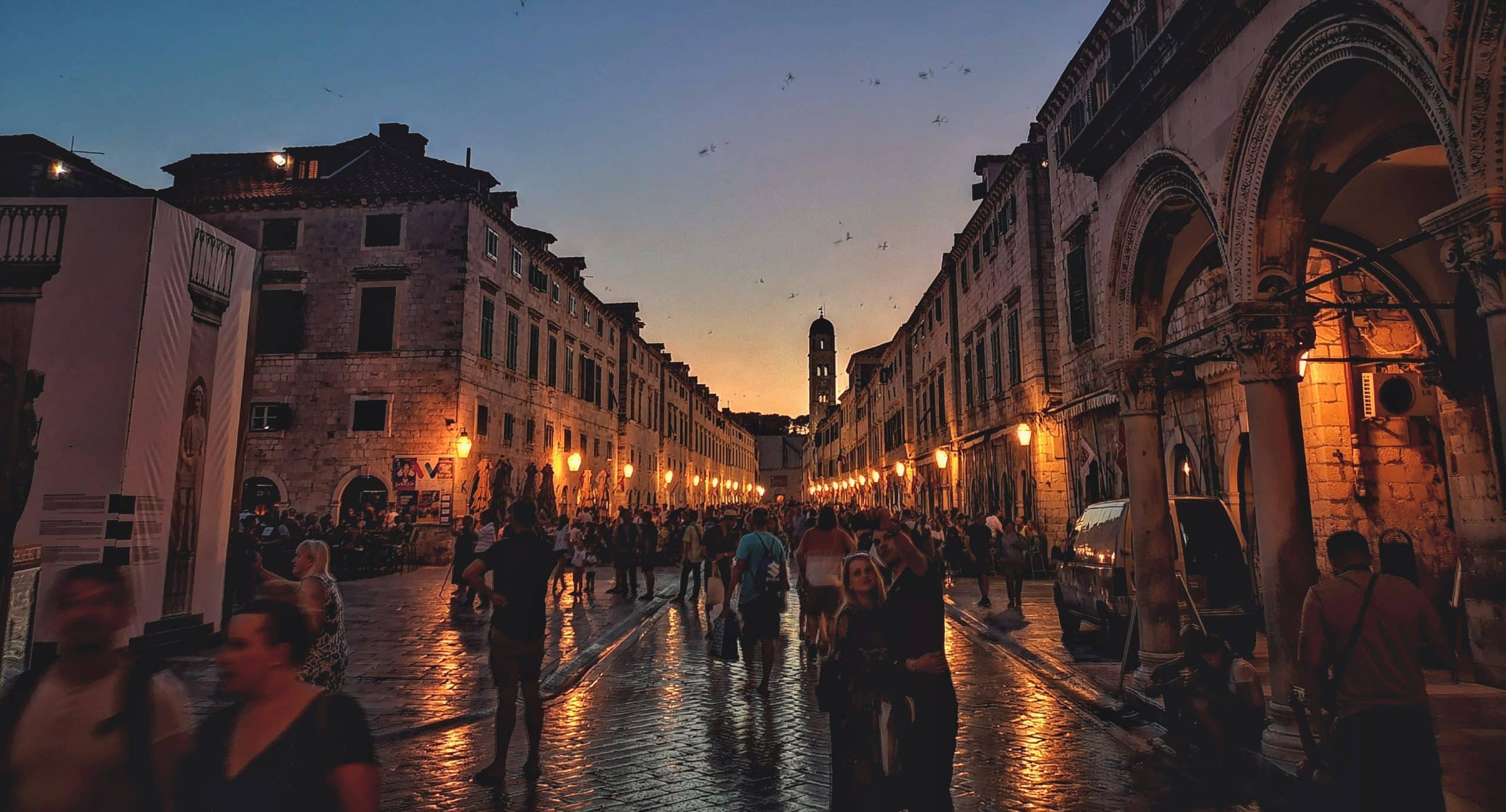
Dubrovnik may be at its most famous around midday, when Stradun fills with tour groups and cameras rise at every corner. But the city often becomes more rewarding later in the afternoon, once the day-trippers begin returning to their ships and coaches. Our very own advice recommends entering the Old Town after 4 pm, when many cruise passengers have already departed. That’s when the city feels less like a landmark to complete and more like a city in which to spend time.
Arrive when everyone leaves
Treat 4 pm as a useful starting point rather than a rigid rule. On a busy cruise day, the change may be gradual, but even a little patience brings more breathing room around Pile Gate and Stradun. Dubrovnik’s current visitor-management strategy uses crowd forecasting and limits cruise traffic to 4,500 passengers a day or two ships at one time – part of the work recognised when it became the 2026 European Green Pioneer of Smart Tourism.
Begin outside Pile Gate with water and comfortable shoes, then decide whether the City Walls still fit that day’s seasonal opening hours. A late circuit can bring gentler light over the terracotta roofs and Adriatic, but don’t race around the ramparts simply to beat closing time. If the final admission has passed, save the walls for early morning and explore at street level instead. You lose none of the atmosphere and gain the freedom to stop whenever something else catches your attention.
Don’t let the Old Town become a checklist
Once inside Pile Gate, pause at Onofrio’s Fountain before following Stradun towards Luža Square. The best-known sights (the Franciscan complex, Sponza Palace, St Blaise’s Church and Rector’s Palace) stand close together, but there is no need to march directly between them. Turn into the lanes on either side of the main street, look above the shopfronts and notice how quickly the crowds thin on the stepped streets. Keep our practical Old Town map on your phone, but use it as a safety net rather than a strict route. Continue past Luža towards the Old Port, where the city walls curve around the harbour and boats settle for the evening. From there, walk to Porporela for an open view towards Lokrum, or circle back through quieter lanes behind the Cathedral.
The centre is compact enough to wander without much risk of becoming truly lost, which is precisely the point: Dubrovnik reveals more when you allow ten minutes for a stone staircase or small square that was never on your list!
Give dinner enough room
Dubrovnik is not a city in which to treat dinner as a quick refuelling stop. Reserve ahead if one restaurant matters to you, particularly in July or August, but leave enough space for the evening’s mood to influence the final choice. A last-minute all-inclusive holiday can keep the practical side of the trip simple while still leaving one night free for the Old Town: walk first, read menus second and sit down when a terrace or small dining room feels right. Move one or two streets away from Stradun if you want a calmer table, and ask about the day’s fish or house speciality rather than automatically choosing the longest menu.
Our guide to what to eat in Dubrovnik is a useful introduction to black risotto, mussels cooked na buzaru, fresh seafood, local wines and caramel-covered rozata, if you would like a starting direction! Order fewer dishes, share them slowly and leave room for dessert or an after-dinner coffee.
Stay for the city’s second act
After dinner, definitely resist the automatic walk back to your room! Dubrovnik’s squares, palaces and seafront spaces regularly become evening venues, particularly during summer, but there’s also lots happening in autumn, such as the Good Food Festival in October. Check what is happening during your stay, but don’t over-plan the night, either. If there is no performance, create your own quieter finale. Maybe walk Stradun after dark, take an evening coffee near Luža, linger beside the Old Port or climb towards the Jesuit Stairs once the daytime photo queues have dispersed. For a different rhythm, continue to Lapad Bay, where an evening promenade by the water offers a relaxed contrast to the enclosed drama of the Old Town.
The best way to experience Dubrovnik after the day-trip rush is not to squeeze more attractions into fewer hours, but to change pace. By staying into the evening, you discover more than a quieter Old Town. You see the moment Dubrovnik shifts from a world-famous destination back into a living Adriatic city – and that’s often the part of the visit you remember most clearly.